The Unexpected Power of Counting Down
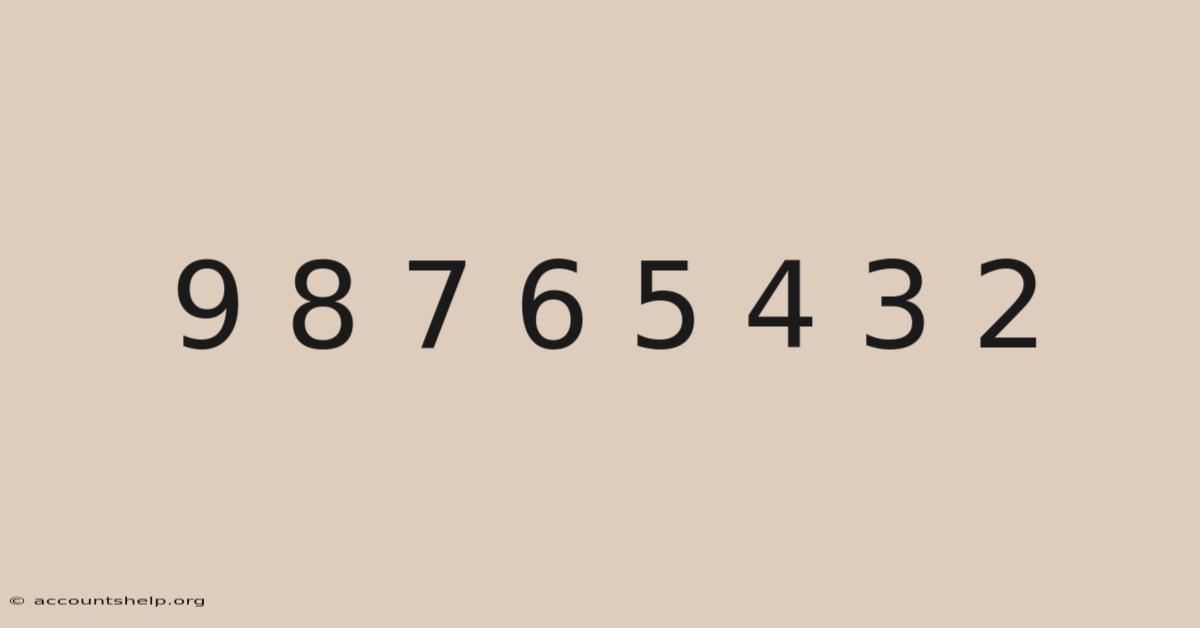
There's something oddly satisfying about watching numbers disappear. Consider this: 9... 8... 7... Even so, each one vanishing into the space behind it, making room for what comes next. We see this everywhere—launch events, app updates, New Year's Eve celebrations, even the humble kitchen timer set for boiling eggs. But have you ever stopped to think about why this simple sequence of 9 8 7 6 5 4 3 2 holds so much sway over our attention? Why does our brain lean in when the countdown begins?
I've caught myself refreshing a webpage at exactly H-minus-ten, fingers hovering over the refresh button, heart rate ticking up right along with the anticipation. Countdowns aren't just arbitrary number sequences—they're psychological triggers woven into how we experience time, expectation, and change. There's a reason for that. Let's pull back the curtain on what's actually happening when those digits start fading away Simple, but easy to overlook. No workaround needed..
What Countdowns Actually Do to Our Minds
The human brain is a prediction machine. We're constantly forecasting what happens next based on patterns we've observed throughout our lives. When we see 9 8 7 6 5 4 3 2, our minds instantly recognize the pattern and begin calculating the endpoint. This triggers a cascade of neurological responses that countdown designers have understood for decades.
This is where a lot of people lose the thread.
Here's the thing most guides won't tell you: the power isn't really in the numbers themselves. The countdown creates a visual representation of time contracting. On top of that, it's in what the numbers represent—a finite resource running out, an event approaching, a moment of decision arriving. Your brain experiences this as urgency, even if the actual time remaining is generous.
I noticed this recently when a software company I follow announced a "48-hour countdown" to a feature launch. Worth adding: not because I needed to— I could have checked anytime—but because the countdown had colonized my attention. I found myself checking in at hour 24, hour 12, hour 6. That's the subtle magic at play But it adds up..
The Psychology Behind Why We Care
Research in behavioral psychology suggests that countdowns put to work what's known as "anticipatory utility." The period before* an event often delivers more emotional satisfaction than the event itself. Think about planning a vacation. The booking, the counting down the days, the anticipation—often those weeks feel richer than the actual week away Surprisingly effective..
Countdowns also tap into something called "loss aversion.That's why " When numbers are disappearing, we subconsciously frame it as losing opportunities to act, to participate, to be part of something. The 2 at the end isn't just a number—it's the last chance. That psychological framing makes us act differently than we would if we were simply told "the event starts in 10 minutes.
But here's where it gets interesting. Not all countdowns create the same effect. Here's the thing — a countdown that feels authentic and tied to real value builds engagement. A countdown that feels manipulative or fake erodes trust fast. In real terms, i've seen brands overuse countdown timers on sales that never actually change, and the audience catches on. Once that happens, the countdown becomes background noise—ignored, distrusted, even annoying The details matter here. Turns out it matters..
Where Countdowns Work (and Where They Don't)
Effective countdowns share a few characteristics. Practically speaking, they're specific. They're relevant. "Coming soon" with no end date creates frustration rather than excitement. But "Launching Friday at 10 AM" gives the brain a concrete anchor. A countdown for a product launch matters to people interested in that product. A countdown for a store closing down 3,000 miles away doesn't Worth knowing..
They're also honest. If you're running a countdown to a deadline, the deadline should exist. Artificial
scarcity—resetting timers, "limited spots" that never fill up, "ending soon" banners that run for months—trains your audience to ignore you. The boy-who-cried-wolf effect is real, and in a digital landscape where attention is the scarcest resource, squandering credibility on a fake timer is a terrible trade.
This distinction matters because countdowns are essentially trust contracts. In real terms, when the clock hits zero, something must happen. Still, a price increases. A door closes. A product ships. Think about it: if the consequence isn't real, the next countdown you run starts with a deficit. Day to day, savvy marketers now treat countdowns as promises, not tactics. They build entire launch sequences around genuine milestones—inventory limits, bonus expiration dates, cohort start times—because the conversion lift from a real deadline outperforms the short-term bump of a fake one, and it compounds over time.
Most guides skip this. Don't That's the part that actually makes a difference..
The Mechanics of a High-Converting Countdown
If you're building one, the execution details separate the pros from the amateurs Turns out it matters..
Placement dictates perception. A timer in the hero section signals "this is the main event." A timer in the checkout bar signals "don't overthink this step." A timer in an email subject line signals "open me now." Each placement primes a different behavior. Don't just slap a clock on the page; decide what decision you're accelerating That's the part that actually makes a difference. That alone is useful..
Visual hierarchy matters more than you think. The numbers need to be legible at a glance—high contrast, sufficient size, monospaced fonts so the width doesn't jump as digits change. Subtle motion helps: a smooth flip animation or a gentle pulse on the seconds draws the eye without triggering banner blindness. But avoid the flashing red "URGENT" styling unless you're genuinely selling fire extinguishers. It cheapens the offer Simple, but easy to overlook..
Contextual copy does the heavy lifting. "Time remaining" is passive. "Your spot expires in" is personal. "Price increases at midnight" is specific. The label frames the countdown's meaning. Test variations. I've seen "Enrollment closes in" outperform "Countdown to deadline" by double digits because the former implies loss of access; the latter implies a calendar event.
Mobile behavior is non-negotiable. Over half your traffic likely views that timer on a phone. If the numbers stack awkwardly, if the colon blinks at a seizure-inducing rate, if the timer pushes your CTA below the fold—you've broken the experience. Test on actual devices, not just browser dev tools.
The Ethical Line
There's a conversation worth having about manipulation versus motivation. In practice, used to help someone overcome inertia on a decision they want* to make (joining a course they've researched, buying a gift they've saved for), it's a nudge. Here's the thing — countdowns exploit cognitive biases—scarcity, urgency, loss aversion—that operate below conscious awareness. Used to pressure a purchase they don't need, can't afford, or don't understand, it's coercion That's the whole idea..
The litmus test is simple: if the countdown disappeared, would the person still make the same choice? Now, if no, the timer manufactured a misaligned one. Now, if yes, the timer accelerated a aligned decision. Long-term brand equity lives in the first category And that's really what it comes down to..
Beyond the Launch: Countdowns as Retention Tools
We obsess over acquisition countdowns—launches, sales, webinars—but the mechanism works beautifully for retention. Onboarding sequences with "Day 3 of 7: reach this feature" create momentum. But subscription renewal notices with "3 days until your rate locks in" reduce churn. Still, community challenges with "48 hours to submit your project" drive participation. The psychology is identical; the application shifts from "buy now" to "stay engaged.
Smart product teams now embed micro-countdowns inside the user experience itself. Think about it: trial expiration warnings. Feature beta access windows. Limited-time support upgrades. These aren't marketing gimmicks—they're UX patterns that help users work through decisions in a noisy world Surprisingly effective..
The Final Tick
The countdown is one of the few UI elements that carries inherent narrative tension. It has a beginning, a middle, and an end. It promises resolution. Practically speaking, in a feed of infinite scroll and ambiguous "learn more" CTAs, that structural clarity is refreshing. It tells the user: This matters. This ends. Decide now Still holds up..
But the power cuts both ways. So every countdown you run makes a withdrawal from your audience's trust account. Make sure the deposit— the genuine value, the real deadline, the honest consequence—covers it. Because of that, because when the numbers hit zero, the timer disappears, but the relationship remains. And that's the only metric that actually counts It's one of those things that adds up. And it works..
Not obvious, but once you see it — you'll see it everywhere.
